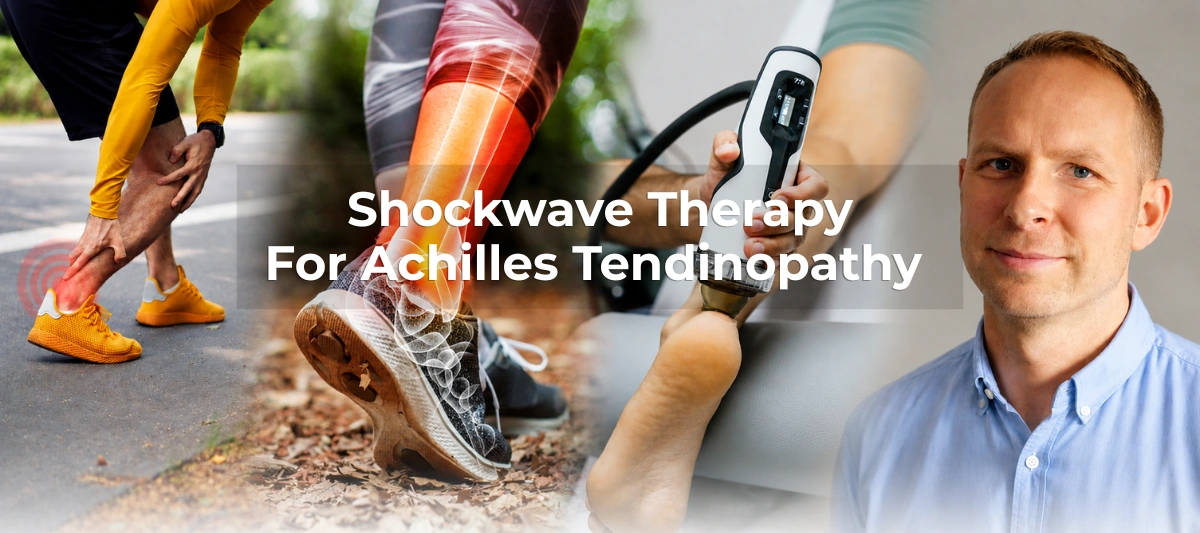
If you’re struggling with persistent pain at the back of your heel or along your Achilles tendon, shockwave therapy may help.
Achilles tendinopathy is a common overuse injury that can make walking, running, exercising and even everyday activities uncomfortable. For some people, the condition develops gradually and refuses to settle despite rest, stretching or other treatments.
At Sussex Physical Therapy, Dwaine Ford combines shockwave therapy with osteopathy and rehabilitation exercises to help address the underlying causes of Achilles tendon pain and support long-term recovery. With over 18 years of clinical experience, Dwaine has helped a wide range of people recover from sports injuries, tendon problems and persistent musculoskeletal pain.
Whether you’re a runner, recreational athlete or simply someone who wants to walk comfortably again, treatment suitability is always assessed on an individual basis.
What Is Achilles Tendinopathy?
The Achilles tendon is the large tendon that connects your calf muscles to your heel bone. It plays an important role in walking, running, jumping and pushing off the ground.
Achilles tendinopathy occurs when the tendon becomes irritated, overloaded or damaged over time. Unlike an acute injury, which happens suddenly, tendinopathy usually develops gradually and can become a long-standing problem if left untreated.
The condition is commonly associated with:
- Running and sports activities
- Sudden increases in training volume
- Repetitive strain
- Tight calf muscles
- Poor movement patterns
- Age-related tendon changes
As the tendon becomes less able to cope with load, pain and stiffness can develop, making normal activities increasingly difficult.
Common Symptoms of Achilles Tendinopathy
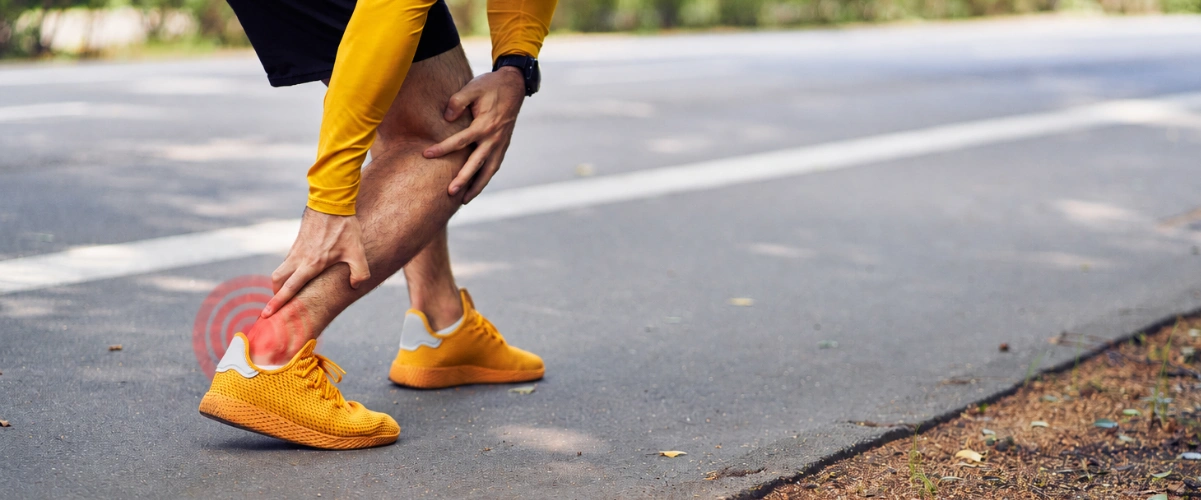
Achilles tendinopathy can affect people in different ways, but there are several symptoms that commonly occur.
Pain During Activity
Many people experience pain during walking, running, climbing stairs or sporting activities. Symptoms often worsen during or after exercise.
Morning Stiffness
One of the most common signs of Achilles tendinopathy is stiffness and discomfort when first getting out of bed in the morning. The tendon often loosens slightly as you begin moving around.
Tenderness & Swelling
The tendon may feel tender when touched, particularly along the painful area. Some people also notice mild thickening or swelling of the tendon.
Reduced Performance
Athletes and active individuals often find they can no longer run, jump or exercise at the level they previously could without aggravating symptoms.
How Can Shockwave Therapy Help Achilles Tendinopathy?
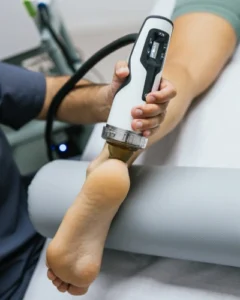 Shockwave therapy, also known as Extracorporeal Shockwave Therapy (ESWT), is a non-invasive treatment that uses acoustic pressure waves to stimulate the body’s natural healing response.
The treatment works by delivering controlled pressure waves into the affected tendon. These waves may help:
- Stimulate tissue healing
- Increase local blood flow
- Encourage tendon repair
- Reduce pain
- Support recovery from chronic tendon injuries
Shockwave therapy is commonly used for persistent Achilles tendon problems that have failed to improve with rest or other conservative treatments.
Because every condition is different, treatment suitability is always assessed during your consultation.
Types of Achilles Tendinopathy We Commonly Treat
Mid-Portion Achilles Tendinopathy
This is the most common form of Achilles tendinopathy and typically affects the middle section of the tendon, a few centimetres above the heel bone.
People often experience pain during running, walking and sporting activities, along with stiffness and tenderness within the tendon itself.
Insertional Achilles Tendinopathy
Insertional Achilles tendinopathy affects the point where the tendon attaches to the heel bone.
Pain is often felt directly at the back of the heel and may be aggravated by walking uphill, running or prolonged standing.
Following a thorough assessment, Dwaine can determine whether shockwave therapy is appropriate for your specific condition.
Benefits of Shockwave Therapy for Achilles Tendinopathy
Shockwave therapy has become increasingly popular because it offers a non-surgical option for managing persistent tendon pain.
Non-Invasive Treatment
Shockwave therapy does not involve surgery, injections or medication. Treatment is delivered externally through the skin.
Encourages Natural Healing
The treatment aims to stimulate the body’s natural repair processes by encouraging tissue healing and regeneration within the affected tendon.
Minimal Downtime
Most people can continue with their normal daily activities throughout treatment, although temporary modifications to exercise or sport may sometimes be recommended.
May Help Long-Standing Tendon Pain
Many people seek shockwave therapy after trying stretching, rest, physiotherapy or other treatments without achieving the improvement they were hoping for.
Shockwave therapy can often be a valuable part of a wider rehabilitation programme for chronic Achilles tendon pain.
Why Choose Dwaine Ford for Achilles Tendinopathy Treatment?
 Choosing the right practitioner is just as important as choosing the right treatment.
With over 18 years of experience, Dwaine Ford has helped people recover from a wide range of musculoskeletal conditions, sports injuries and persistent pain problems.
As a fully qualified osteopath and member of the Institute of Osteopathy, he takes a thorough and patient-focused approach to assessment, diagnosis and treatment.
Over the years, Dwaine has worked with everyone from recreational exercisers and active individuals through to professional athletes. Regardless of your activity level, treatment is always tailored to your specific condition, goals and lifestyle.
Learn more about Dwaine Ford and his approach to treatment →
Shockwave Therapy, Osteopathy & Rehabilitation
One of the key advantages of treatment at Sussex Physical Therapy is that shockwave therapy is not used in isolation.
Persistent Achilles tendon pain often develops because of a combination of factors, including movement patterns, calf muscle strength, training loads, ankle mobility and previous injuries.
Simply treating the painful area alone does not always address the underlying cause.
Where appropriate, Dwaine combines shockwave therapy with osteopathic treatment and personalised rehabilitation exercises to help improve movement, reduce strain on the tendon and support long-term recovery.
Rehabilitation exercises are provided during the first appointment and monitored throughout treatment to help ensure continued progress.
This integrated approach helps create a treatment plan tailored to the individual and may improve outcomes compared with focusing on a single treatment method alone.
What Happens During Treatment?
Your First Appointment
Your initial appointment lasts approximately 45 minutes.
Dwaine will begin by taking a detailed case history and discussing your symptoms, medical history and treatment goals. This is followed by a thorough assessment and examination to establish an accurate diagnosis and determine whether shockwave therapy is appropriate for your condition.
Treatment is usually provided during the same appointment and, where appropriate, personalised rehabilitation exercises will also be prescribed.
Follow-Up Appointments
Follow-up appointments typically last around 30 minutes.
At each session, Dwaine will review your progress, discuss any changes in symptoms and carry out any necessary reassessment before treatment. This allows your treatment plan to be adjusted where needed and ensures recovery continues moving in the right direction.
How Many Sessions Will I Need?
Research suggests that many people experience improvement within 3–5 shockwave therapy sessions. However, the exact number of sessions required will depend on the severity of your symptoms, how long the condition has been present and how your body responds to treatment.
Treatment recommendations are always tailored to the individual.
Achilles Tendinopathy Treatment Fees
Initial Consultation & Shockwave Therapy
£70 (up to 45 minutes)
Follow-Up Shockwave Therapy Appointments
£60
Patient Feedback
I have been seeing Dwaine over the past few years & he has helped me through various sporting injuries. I had a shoulder injury caused through an accident at the gym, which he has worked on & given me various exercises & this has improved dramatically. Also, I have had an ongoing chronic Achilles tendonitis which again he has treated me with deep tissue massage & various exercises for me to do and it has been helpful. I have found Dwaine has helped me manage my sporting injuries very well. – David, Haywards Heath
Frequently Asked Questions
Does Shockwave Therapy Work for Achilles Tendinopathy?
Research suggests that shockwave therapy can be an effective treatment option for many people suffering from chronic Achilles tendinopathy. It is commonly used when symptoms have persisted for several months and have not responded fully to other treatments.
Is Shockwave Therapy Painful?
Some people experience mild discomfort during treatment, particularly when the area being treated is sensitive. However, treatment is generally well tolerated and settings can be adjusted where necessary.
How Many Sessions Will I Need?
Most people require between 3 and 5 sessions, although this varies depending on the severity and duration of symptoms.
How Long Does Recovery Take?
Recovery times vary between individuals and depend on factors such as the severity of the condition, how long symptoms have been present and how closely rehabilitation advice is followed.
Can I Continue Running During Treatment?
In many cases, some level of activity can be maintained during treatment. However, this depends on the severity of your condition and your training demands. Dwaine can advise on appropriate activity levels during your rehabilitation programme.
Do I Need a Referral?
No. Most people can book directly without a referral.
Looking for more answers? View our Osteopathy & Shockwave Therapy FAQs.
Book Your Achilles Tendinopathy Assessment
If you’re struggling with persistent Achilles tendon pain, a running injury or a long-standing tendon problem that hasn’t responded to other treatments, shockwave therapy may help.
Appointments are available in Heathfield, Haywards Heath and Horam.
Or if you’d prefer to ask a question first, please call 07772 005779 or email .
You can also view more of the conditions commonly treated at Sussex Physical Therapy.
To learn more about shockwave therapy and how it may help a range of persistent tendon injuries, visit our Shockwave Therapy for Pain & Injuries page.
Read some of our patient success stories to see how we’ve helped people with similar conditions.
