
If you’re experiencing persistent heel pain, particularly when taking your first steps in the morning, plantar fasciitis could be the cause.
Plantar fasciitis is one of the most common causes of heel pain and can make everyday activities such as walking, exercising and standing for long periods uncomfortable. While many cases improve with time and appropriate treatment, some people continue to experience symptoms for months.
At Sussex Physical Therapy, Dwaine Ford combines shockwave therapy, osteopathy and rehabilitation exercises to help people recover from plantar fasciitis and return to normal activities as quickly and safely as possible.
With over 18 years of clinical experience and as a member of the Institute of Osteopathy, Dwaine provides personalised treatment plans tailored to the individual rather than a one-size-fits-all approach.
Is It Plantar Fasciitis?
 Plantar fasciitis often causes pain underneath the heel or along the arch of the foot. Many people describe a sharp or stabbing pain when taking their first few steps in the morning or after sitting for a period of time.
Common symptoms include:
- Pain under the heel
- Pain when taking your first steps in the morning
- Heel pain after sitting or resting
- Pain that improves as you move around but returns later
- Discomfort after exercise or long periods of standing
- Tightness in the sole of the foot
If these symptoms sound familiar, an assessment can help determine whether plantar fasciitis is the cause of your heel pain.
What Is Plantar Fasciitis?
The plantar fascia is a strong band of connective tissue that runs along the bottom of the foot, connecting the heel bone to the toes.
Its role is to help support the arch of the foot and absorb the forces placed through the foot during walking, running and other daily activities.
When the plantar fascia becomes irritated, overloaded or damaged, it can lead to pain and stiffness, particularly around the heel. While the condition is commonly referred to as plantar fasciitis, many long-standing cases are believed to involve degeneration of the tissue rather than ongoing inflammation.
This is one reason why chronic plantar fasciitis can sometimes be difficult to resolve without targeted treatment and rehabilitation.
What Causes Plantar Fasciitis?
Plantar fasciitis can develop for a variety of reasons.
Common contributing factors include:
- Repetitive strain through walking, running or sport
- Sudden increases in activity levels
- Standing for long periods
- Tight calf muscles
- Reduced ankle mobility
- Poor foot mechanics
- Inappropriate footwear
- Excessive loading of the plantar fascia
In many cases, the problem develops gradually over time rather than as the result of a single injury.
Understanding the factors contributing to your symptoms is an important part of creating an effective treatment plan.
How Can Shockwave Therapy Help Plantar Fasciitis?
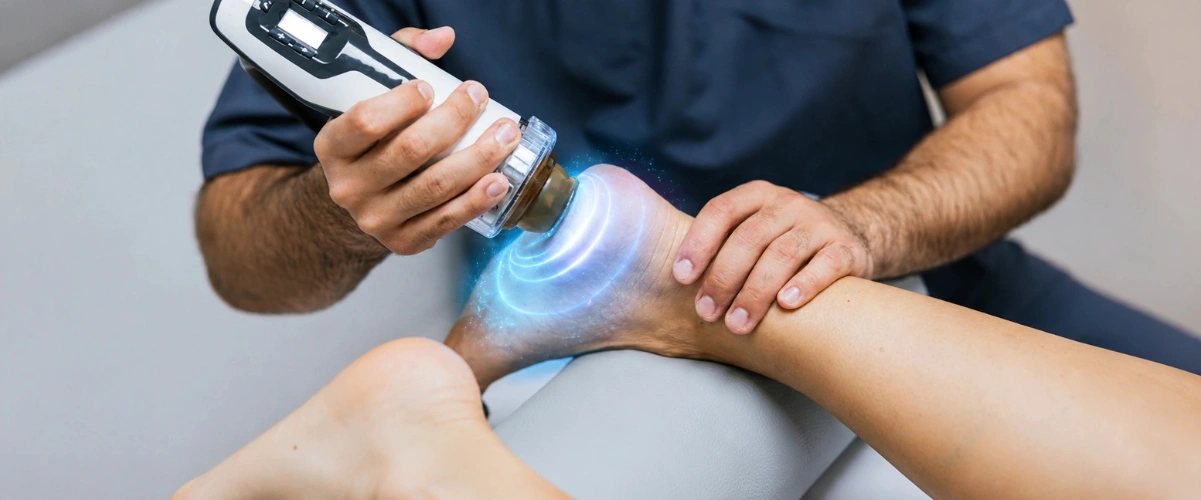
Shockwave therapy is an evidence-based treatment that uses acoustic pressure waves to stimulate the body’s natural healing response.
During treatment, controlled shockwaves are delivered to the affected area of the plantar fascia. These waves help stimulate blood flow, encourage tissue repair and support healing within the damaged tissue.
Shockwave therapy is often considered for people who have experienced persistent heel pain for several months and who have not achieved sufficient improvement with rest, stretching or other conservative treatments.
While no treatment can guarantee results, research has shown that shockwave therapy may be beneficial for many people suffering from chronic plantar fasciitis.
Treatment suitability is always assessed on an individual basis and will be discussed during your consultation.
Benefits of Shockwave Therapy for Plantar Fasciitis
Non-Invasive Treatment
Shockwave therapy does not involve injections or surgery. Treatment is delivered externally through the skin, making it a convenient option for many people looking for a non-invasive approach to heel pain treatment.
Encourages Natural Healing
Shockwave therapy works by stimulating the body’s natural healing processes. This may help encourage tissue repair within the plantar fascia and support long-term recovery.
Minimal Downtime
Most people are able to continue with their normal daily activities during a course of treatment. Depending on your condition, some activity modification may be recommended to support recovery.
Can Help Persistent Heel Pain
Many people seek shockwave therapy after experiencing symptoms for several months. When combined with appropriate rehabilitation exercises and management strategies, it can often play an important role in recovery.
 Why Choose Dwaine Ford for Plantar Fasciitis Treatment?
Choosing the right practitioner is just as important as choosing the right treatment.
With over 18 years of experience, Dwaine Ford has helped people recover from a wide range of musculoskeletal conditions, sports injuries and persistent pain problems.
As a fully qualified osteopath and member of the Institute of Osteopathy, he takes a thorough and patient-focused approach to assessment, diagnosis and treatment.
Over the years, Dwaine has worked with everyone from recreational exercisers and active individuals through to professional athletes. Regardless of your activity level, treatment is always tailored to your specific condition, goals and lifestyle.
Learn more about Dwaine Ford and his approach to treatment →
Shockwave Therapy, Osteopathy & Rehabilitation
One of the key advantages of treatment at Sussex Physical Therapy is that shockwave therapy is not used in isolation.
Persistent plantar fasciitis often develops because of a combination of factors, including foot mechanics, movement patterns, mobility restrictions and loading issues. Simply treating the painful area alone does not always address the underlying cause.
Where appropriate, Dwaine combines shockwave therapy with osteopathic treatment and personalised rehabilitation exercises to help improve movement, reduce strain on the plantar fascia and support long-term recovery.
Rehabilitation exercises are provided during the first appointment and monitored throughout treatment to help ensure continued progress.
This integrated approach helps create a treatment plan tailored to the individual and may improve outcomes compared with focusing on a single treatment method alone.
What Happens During Treatment?
Your First Appointment
Your initial appointment lasts approximately 45 minutes.
Dwaine will begin by taking a detailed case history and discussing your symptoms, medical history and treatment goals. This is followed by a thorough assessment and examination to establish an accurate diagnosis and determine whether shockwave therapy is appropriate for your condition.
Treatment is usually provided during the same appointment and, where appropriate, personalised rehabilitation exercises will also be prescribed.
Follow-Up Appointments
Follow-up appointments typically last around 30 minutes.
At each session, Dwaine will review your progress, discuss any changes in symptoms and carry out any necessary reassessment before treatment. This allows your treatment plan to be adjusted where needed and ensures recovery continues moving in the right direction.
How Many Sessions Will I Need?
Research suggests that many people experience improvement within 3–5 shockwave therapy sessions. However, the exact number of sessions required will depend on the severity of your symptoms, how long the condition has been present and how your body responds to treatment.
Treatment recommendations are always tailored to the individual.
Plantar Fasciitis Treatment Fees
Initial Consultation & Shockwave Therapy
£70 (up to 45 minutes)
Follow-Up Shockwave Therapy Appointments
£60
For current availability and online booking, please use the booking link below or get in touch if you have any questions before arranging an appointment.
Frequently Asked Questions
Does Shockwave Therapy Work for Plantar Fasciitis?
Research suggests that shockwave therapy can be an effective treatment option for many people suffering from chronic plantar fasciitis. It is commonly used when symptoms have persisted for several months and have not responded fully to other treatments.
Is Shockwave Therapy Painful?
Some people experience mild discomfort during treatment, particularly when the area being treated is sensitive. However, treatment is generally well tolerated and settings can be adjusted where necessary.
How Many Sessions Will I Need?
Most people require between 3 and 5 sessions, although this varies depending on the severity and duration of symptoms.
How Quickly Will I Notice Results?
Some people notice improvements after only a few sessions, while others experience more gradual changes as healing progresses. Individual responses vary.
Do I Need a Referral?
No. Most people can book directly without a referral.
Who Is Shockwave Therapy Suitable For?
Shockwave therapy may be suitable for people experiencing persistent plantar fasciitis or chronic heel pain. Following an assessment, Dwaine can advise whether it is appropriate for your condition.
Looking for more answers? View our Osteopathy & Shockwave Therapy FAQs.
Book Your Appointment
If you’re struggling with persistent heel pain or plantar fasciitis, shockwave therapy may help.
Appointments are available in Heathfield, Haywards Heath and Horam.
Or if you’d prefer to ask a question first, please call 07772 005779 or get in touch with us here.
You can also view the full list of conditions commonly treated at Sussex Physical Therapy.
To learn more about shockwave therapy and how it may help a range of persistent tendon injuries, visit our Shockwave Therapy for Pain & Injuries page.
See some of our patient success stories to see how we’ve helped people with similar conditions.
